The goal of a kitchen makeover is to make healthy food in less time by getting rid of what is unhealthy, organizing the kitchen, and stocking up on healthier ingredients. In this article, we discuss how to support better eating habits by creating a healthy kitchen environment that includes nutritious foods that are also convenient. A big part of being healthy is being organised, since it’s much easier to eat well when there are only good choices in front of you. Your kitchen and pantry staples should encourage a healthy diet, especially when you’re too busy to shop for fresh food. Decluttering the fridge, freezer and pantry might take a few hours, but the long-term health benefits are well worth it.
Fresh Start
The most successful kitchen makeovers begin with getting rid of unhealthy foods; namely those calorie-dense, nutrient-deficient, high-fat snack foods that only serve to calm emotions, not improve health. Junk food generally has more than five ingredients and includes ingredients only scientists can pronounce. Healthy food typically has one ingredient—the food itself.
De-clutter
Clutter is one of the biggest causes of stress in our lives. When we clutter our lives physically and mentally, it drains our energy. If we truly want to live a healthy life, we need to de-clutter it first. Start by clearing out your kitchen utensils and equipment. Hoarding appliances and equipment that never gets used takes up a lot of space. Fill your newfound space with equipment that will enable and remind you to make better choices e.g. a blender, steamer, stainless steel cookware, pressure cooker, mandolin, salad spinner, food processor and food scale.
Start your healthier habits with a clean slate. But be aware that clutter is very stubborn. It sneaks right back to our lives very easily, as do old habits.
Stock up
Keep your kitchen stocked with all the essentials that you and/or your family need. If you have run out of fresh produce, you will at least be able to assemble a decent meal with dry goods and prepared frozen ingredients, rather than falling into the takeaway trap. Make sure these products are in your pantry: beans, chickpeas, lentils, wholewheat pasta, curry pastes, wholegrain rice and flours, nuts, seeds and nut butters. I also like to keep lots of basic grains, such as quinoa, buckwheat, couscous, oats and barley. When it comes to flours, grains, and pastas, swap the white and refined one’s for wholegrains, which are higher in fibre. Small changes like these can make a difference.
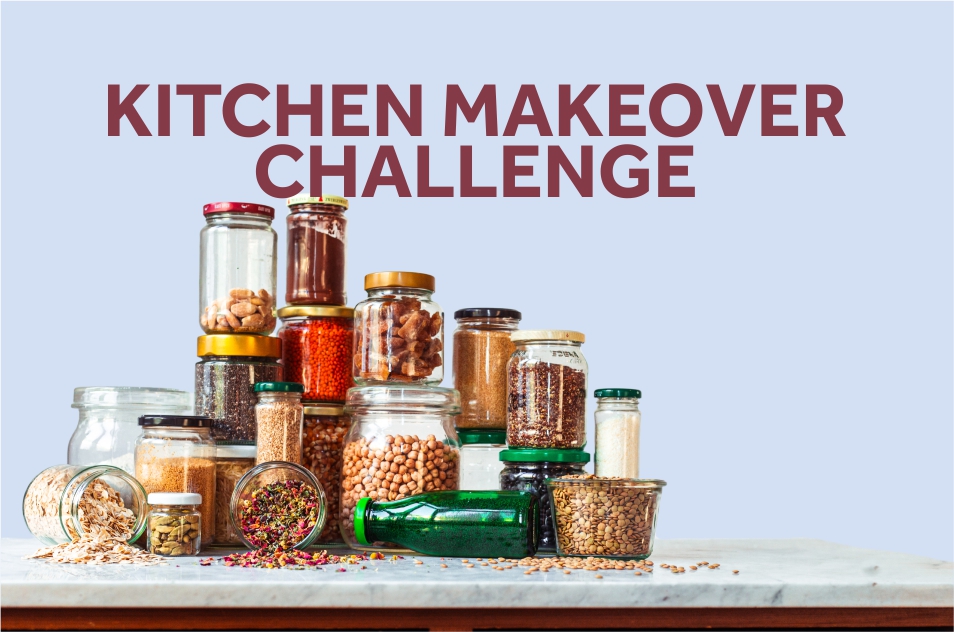
Nuts and seeds are a great natural source of vitamins, minerals, protein, fat, and fibre, and most of us don’t eat enough of them. When buying nuts and seeds, buy in bulk as it works out much cheaper, and rather buy raw and unprocessed than roasted and salted. Keep them in sealed glass jars in the pantry, ready to be sprinkled on top of soups, salads, cereals, smoothies, or dishes, and they also make fantastic on-the-go snacks.
Smart storage
Keep healthy foods accessible and visual, both in and out of the fridge. Use airtight, transparent containers to store food, so you can see what you’ve got. Square or rectangular containers stack well and take up less space. Cut out the cooking directions and best-before dates from food packaging and include them in the container, facing outward so you can easily see them. Store foods you want to be ‘out of mind’ in hard-to-reach places. Tempting treat foods or snacks you bought for entertaining are safest at the back of the pantry where you won’t see them daily.
Try to keep healthy foods in clear view. For example, a well-stocked fruit bowl on the dinner table, or in front of the television or glass jars filled with mixed nuts and dried fruits. Cut up raw veggies and store them in clear containers at eye-level in the fridge as this will encourage healthy snacking.
Keep your fridge organised by grouping ingredients separately in sections that are visible. This way you can keep track on what you have. Use one shelf for each food group: dairy, meats, vegetables, and fruits. If you’re going to store fresh foods in bags, make sure you use the clear zip-lock type.
Stay fresh (when possible)
When it comes to fresh fruits and vegetables, experts recommend eating 5 – 13 servings per day. Whole foods, like fruits and vegetables, are the ultimate fast food—just pick it up and take a bite.
Buy fruits and veggies in season and locally. It is cheaper, and whatever you can’t eat you can freeze in portion sizes and keep for smoothies.
Planning and prepping ahead is key
Not having enough time is everybody’s reality and is often the reason why nutrition is compromised and no longer a priority. A well stocked kitchen and fridge with healthy foods makes it so much easier to assemble a lunchbox or meal.
Deciding what to eat for dinner throughout the week can take just 10 minutes.Make your shopping list in advance and use online ordering as a convenient option. This way you can have a weekly shopping list that you can just re-order.
Weekends can be used to prepare meals and snacks ahead of time. Factor in ingredients that need using up, and include at least one meal where leftovers can form the basis of another meal e.g. Bowls, Wraps and Stir fries.
Here are a few tips:
These little tricks save me time and enable me to cook a meal from scratch far more quickly during a full-on week!
Freeze it
Let’s be realistic – most of us lead hectic lives, and as much as we might really want to, eating good food all the time can be difficult. This is where the freezer can make all the difference: cook in bulk, portion out, and freeze. Purchase fresh cuts of lean meat and fatty fish. Divide them into individual portion sizes, place into freezer bags, and label each bag with the date of purchase and type of meat or fish before placing in the freezer.
Smoothie recipes can be packaged into individual portion sizes and frozen for a quick breakfast or light dinner option. When labelling the smoothie packs, include blending instructions like what liquids, spices, or powders to add and in what amount. Add healthy fat and a rich creamy texture to smoothies by adding an avocado to the freezer-pack.
One of the best decisions you can make for your health is to start setting small attainable goals. Totally changing the way you eat can seem overwhelming, so try a “stepladder” approach – focus on one small change until it becomes part of your daily routine, then add another, and another.